
Printing machines, presses, laminators, textile winders, and converting lines use rotary unions to transfer air, vacuum, water, or coolant into rotating rollers and drums without twisting fixed hoses.
Who this is for: Printing machinery builders, printing press manufacturers, textile machinery OEMs, and converting equipment designers specifying rotary transfer for rollers and winding systems.
A rotary union for printing machinery provides a sealed path between the stationary supply and a rotating roller or drum. Typical functions include pneumatic actuation, air blow-off, vacuum holding, and water or coolant transfer for temperature control.
Start the selection with six inputs: every medium, operating pressure, roller RPM, passage count, shaft bore, and mounting envelope. Then account for lint, paper dust, ink, or adhesive contamination that may affect seal protection and maintenance access.
If air, vacuum, and liquid must remain isolated, assign independent passages rather than combining circuits. Compare the machine drawing with the rotary union interface, port direction, and anti-rotation arrangement before choosing a standard model or requesting a custom layout.
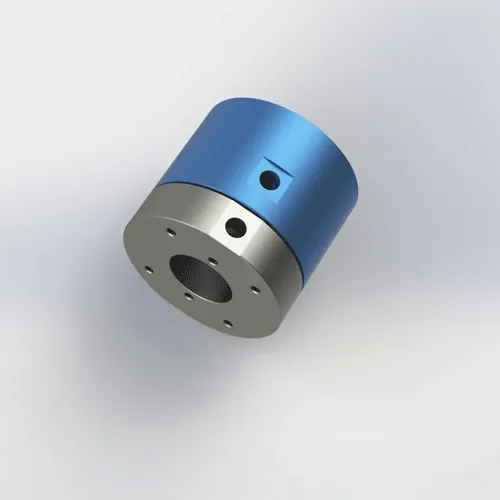 Typical requirementAir, vacuum, water, or coolant transfer for rotating rollers, winding shafts, printing drums, and converting equipment.
Separate air, vacuum, water, coolant, and oil requirements before selecting a product family.
Confirm shaft bore, rotational speed, and whether a through-bore layout is needed.
Lint, paper dust, ink, and adhesive residue may require protection or special maintenance planning.
| Machine Area | Common Function | Selection Focus | Begapunk Direction |
|---|---|---|---|
| Printing press roller | Air, vacuum, or cooling transfer | Media compatibility, roller RPM, and low leakage | BP-2P-30-0001 or custom |
| Textile winding machine | Air blow-off or shaft actuation | Compact mounting and dust tolerance | BP-1P-0003 or BP-2P-0001 |
| Paper converting line | Air or vacuum | Passage isolation and contamination control | BP-2P-50-0001 for air; other media require written compatibility confirmation |
Send the machine layout, media, pressure, passage count, RPM, port size, and mounting space. Begapunk can review the interface and suggest a suitable standard or custom pneumatic rotary joint.
Yes. They are used when air, vacuum, water, coolant, or other media must pass into rotating rollers or drums.
It can be possible with separated passages, but media, pressure, speed, and seal requirements must be confirmed.
Confirm every medium, operating pressure, roller RPM, passage count, shaft bore, mounting space, and contamination source. Use separate passages for media that must not mix, then verify the interface against the machine drawing before selection.