
Welding positioners and rotary welding fixtures often need pneumatic clamping or fixture control while the workpiece rotates. A rotary union keeps air lines protected and stable.
Who this is for: Welding equipment manufacturers, fabrication shop managers, and automation engineers designing rotary welding fixtures and positioners.
Rotary welding tables and positioners often use pneumatic clamps to hold parts while the fixture turns through the welding path.
External hoses can be damaged by rotation, heat, spatter, and fixture movement. A rotary union routes the air through the rotating axis and reduces exposed hose loops.
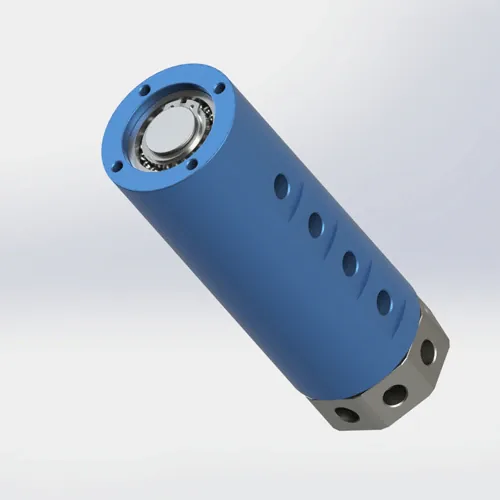 Typical requirementPneumatic clamping and fixture control for rotary welding tables, pipe welding rotators, and robotic welding fixtures.
Count clamp, unclamp, blow-off, and sensor-related pneumatic circuits before selection.
Keep the rotary union away from direct spatter and confirm shielding when the environment is harsh.
Review anti-rotation support and hose routing to prevent side loading.
| Machine Area | Common Function | Selection Focus | Begapunk Direction |
|---|---|---|---|
| Rotary welding table | Clamp and release air | Stable pressure and protected routing | BP-2P or BP-3P |
| Pipe welding rotator | Fixture actuation | Durability and vibration control | Multi-passage rotary union |
| Robotic welding fixture | Clamp, blow-off, and tooling air | Multiple independent circuits | BP-4P, BP-8P, or custom |
Send the machine layout, media, pressure, passage count, RPM, port size, and mounting space. Begapunk can review the interface and suggest a suitable standard or custom pneumatic rotary joint.
Yes for pneumatic fixture transfer, but the installation should protect the joint from direct spatter, heat, and side loading.
Simple fixtures may use 2 or 3 passages. Complex robotic fixtures may require 4 to 8 passages or a custom layout.